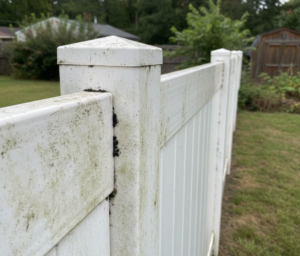
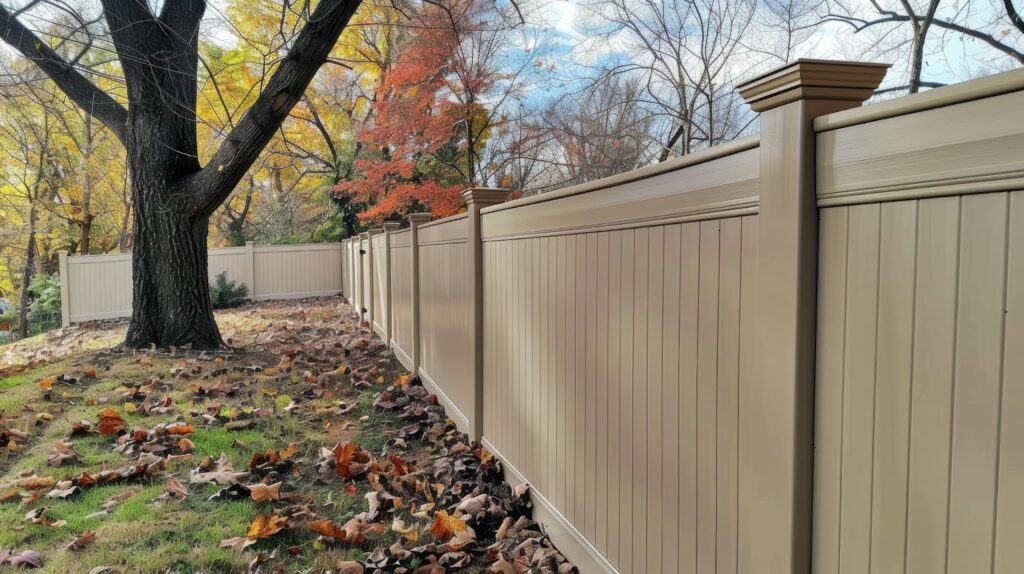
If your vinyl fence has started to look dull, faded, or chalky, especially after years of rain, humidity, and constant moisture, you might be wondering: can I just paint it? Vinyl fences are designed to be low-maintenance, but over time, exposure to the elements can leave them looking worn or discolored.
If you live in a wet climate where your fence faces rain for most of the year, it’s natural to question whether paint will even stick—or if it’s worth the effort. Before you grab a brush, it’s important to understand the challenges and the proper steps for painting vinyl so your fence not only looks good but also stays protected for years to come.
Painting Vinyl Fences: Why It’s Only a Short-Term Fix
Technically, you can paint vinyl fencing. But manufacturers don’t recommend it, and there’s a good reason why. Vinyl’s smooth, non-porous surface makes paint adhesion extremely difficult. Even with specialized primers, the paint struggles to create a lasting bond.
In wet climates, this problem gets worse quickly. Moisture works its way between the paint and vinyl surface, causing peeling, bubbling, and flaking within months. What seems like a cost-effective refresh can quickly turn into a maintenance headache that costs more in the long run.
The better question isn’t “Can you paint it?” but “Why did it fade in the first place?”
Painting Vinyl Fences in Wet Climates Is a Losing Battle
Vinyl fencing might look like a low-maintenance option, but painting it in rainy or humid regions is often a short-lived solution. Here’s why:
Adhesion Challenge
Vinyl’s smooth, non-porous surface makes it difficult for paint to stick. Paint needs texture to grip, so applying it to vinyl is like trying to glue something to glass. Even specialty vinyl paints and bonding primers can’t fully solve this.
The paint mostly sits on the surface, and over time, temperature changes cause the vinyl to expand and contract, breaking whatever adhesion existed.
How Moisture Accelerates Failure
Moisture poses a natural threat to paint. Rain, humidity, and morning dew find their way under the paint film through microscopic gaps, acting like a wedge that lifts the paint away from the surface.
In regions with freeze-thaw cycles, trapped water expands and contracts, further accelerating peeling and bubbling. Within the first season, you might notice flaking edges, and the deterioration only worsens with more wet weather.
Problem Beneath the Surface
Painting over faded, chalking, or warped vinyl only masks more profound issues. Most vinyl fencing is made from PVC or polyethylene, materials that can distort in direct sun at temperatures above 160°F.
Dark surfaces can exceed 180°F, causing warping that ultimately cracks any paint layer. No amount of primer or paint can permanently fix underlying structural issues.
True Maintenance Cost
Painting vinyl is more labor-intensive than wood. It requires thorough cleaning with TSP, light sanding, applying a bonding primer, and then two coats of specialized vinyl paint. In wet climates, this process often needs repeating every 1–2 years.
Between the cost of materials, labor, and time, what seems like a simple aesthetic update quickly becomes an ongoing and expensive maintenance cycle.
The smarter choice is to choose vinyl designed to resist fading, warping, and moisture. It’s a one-time investment that keeps your fence looking great year after year, without the hassle and cost of constant repainting.
Common Mistakes People Make When Painting Vinyl
Using the wrong paint. Regular exterior paint is not formulated for vinyl and almost always fails quickly. Vinyl-specific paints are designed to flex with the surface and adhere better, but even they have limits.
Skipping prep work. Skipping a bonding primer or not cleaning the surface properly prevents the paint from sticking. Without proper prep, the paint simply sits on top of the vinyl and peels off over time.
Poor timing. Painting during humid weather or right before rain stops the paint from curing correctly. The surface needs dry conditions for the paint to form whatever bond it can with the vinyl.
Painting damaged vinyl. Chalky, brittle, or warped vinyl can’t be fixed with paint. At this stage, the fence needs replacement, not a cosmetic cover-up.
Treating the symptom, not the cause. Painting faded or deteriorated vinyl doesn’t solve the underlying problem. It only hides it temporarily, setting you up to face the same issues again.
Fix the Root Problem, Not Just the Surface
Painting a vinyl fence is possible, but it’s only a short-term fix that requires constant maintenance, especially in wet climates. Expect to repaint every 1–2 years, along with all the prep work and costs.
A smarter choice is vinyl designed to resist fading and weathering from the start. CPVC formulations with high heat tolerance and UV inhibitors maintain color without painting, chalking, or warping, even in harsh conditions.
If your fence is showing its age, consider whether repeated painting cycles are worth it or if investing in low-maintenance vinyl offers better long-term value. Looking for vinyl that stays vibrant without painting? Contact us for expert advice on vinyl fence selection. Our fade-resistant black vinyl fencing is engineered to withstand weather, heat, and time, backed by 18 years of proven performance.