A long fence run can look straightforward on a map and become complicated on the ground. A low spot collects water, a gate needs room for equipment, and the line changes direction just where the slope becomes steeper.
A vinyl ranch rail fence installation works best when those conditions are discussed before the posts are ordered. The project is more than a repeated series of holes. It is a layout that needs to work with the terrain, the selected fence system and the way the property is used.
Walk the proposed fence line first
Start with the intended route, corners and openings. Confirm boundaries and any necessary permissions before deciding where the fence will stand. Identify existing utilities through the applicable utility-location process and ask about privately installed services that may need separate locating.
Point out wet ground, roots, rock, drainage routes and areas that machinery cannot reach easily. Site photographs help with early discussions, but an installer may need to inspect the route to establish the work. Avoid clearing or excavating a questionable area just to make the line fit a sketch.
Plan gates around everyday movement
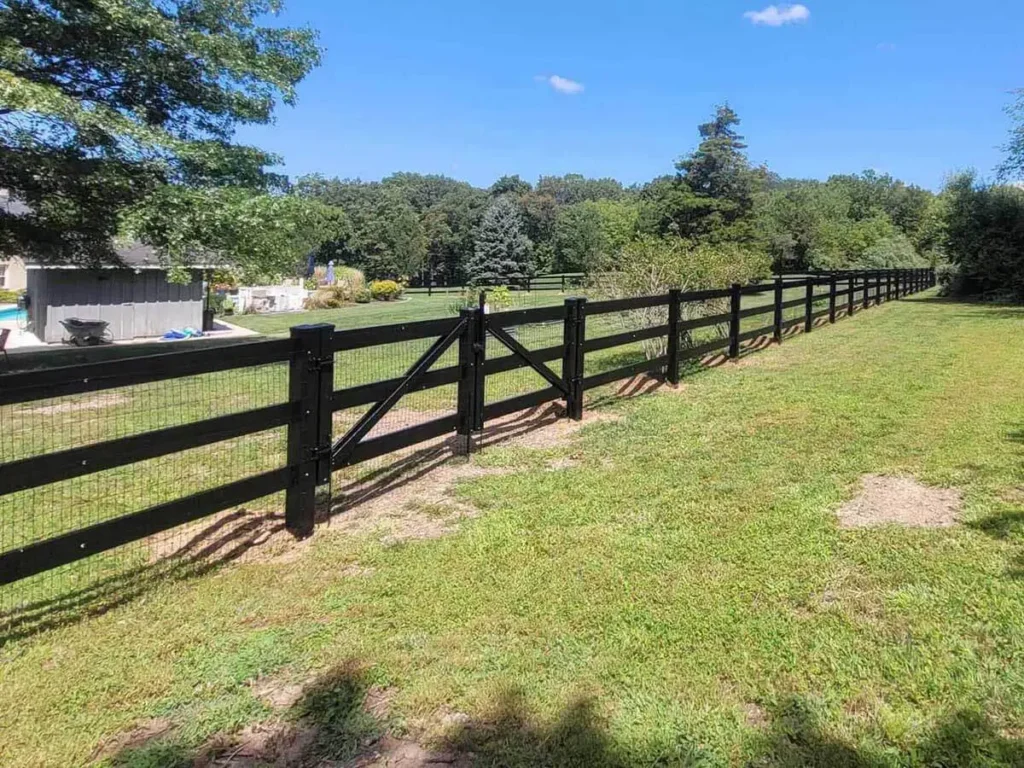
Show the installer how people, vehicles and equipment move through the property. List the openings needed for mowing, deliveries and routine animal management. Consider approaches and turning space as well as the clear opening.
Penn State Extension recommends planning horse facilities with gates, traffic routes and working access considered together. Apply that planning principle to your site, then have the appropriate professional confirm the details. A gate location that works on an empty field may be inconvenient once paddocks and equipment routes are in use.
Agree how the selected system will follow the terrain
Ask the installer to explain what happens as the ground rises, falls or changes direction. The options depend on the product, its connections and the amount of grade change. Do not assume every rail system can follow every slope in the same way.
Review the appearance and openings at the finished ground level. Where animals will use the area, the gaps and transitions need a separate suitability check. A neat top line does not by itself establish that the lower opening or a corner is appropriate for those animals.
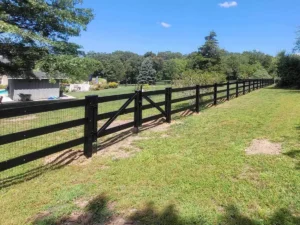
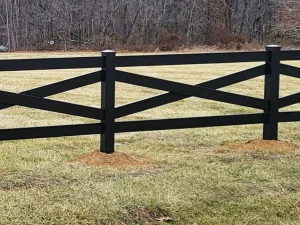
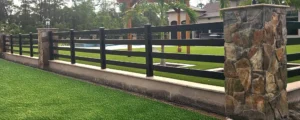
BLACKline HHP offers several ranch rail styles. Select the actual configuration before finalizing the layout, because rails, posts, end conditions and gates need to match the product being supplied.
Use the manufacturer’s drawings to set the post layout
Your installer should work from the current shop drawings and assembly instructions for the selected system. Confirm line posts, ends, corners and gate posts rather than assuming every post has the same role.
The spacing and foundation details need to suit the product and site. Soil, exposure, grades and gate loads can change the design discussion. This is why a general online hole-depth rule is a poor substitute for the installation information and project requirements.
BLACKline’s ranch rail technical specification calls for layout information, product data and installation instructions. Ask for those documents with the proposal so the material order and field layout describe the same fence.
Confirm handling, sequencing and handover
Discuss delivery access and a storage area before the shipment arrives. Follow the manufacturer’s handling and storage instructions. Keep components out of construction traffic and inspect the delivery so any damage is identified promptly.
Ask when the work area can return to its intended use and who will confirm completion. At handover, walk the fence line with the installer. Check the agreed alignment, completed connections, caps, gate operation and any unresolved site work.
For the general assembly overview, see BLACKline’s existing vinyl fence installation guide. For an acreage project, keep the terrain and working-access plan alongside that overview throughout the job.
Frequently asked questions
Can ranch rail fencing be installed on uneven ground?
Often a workable layout can be designed, but the approach depends on the grade changes and selected system. Have the installer confirm transitions and openings using current manufacturer guidance.
Are gate posts the same as line posts?
Do not assume they are. The gate opening, hardware and loads can require different support details. Confirm the actual components and drawings before ordering.
How long does a ranch fence installation take?
Ask for a site-specific schedule. Run length, access, soil, preparation, gates and other project conditions affect the work; there is no single duration for every ranch.
Start with a fence plan that fits your site
Send BLACKline HHP your proposed layout, terrain photographs and gate requirements. Request a ranch rail quote and the current product documents so your dealer or installer can prepare a clear scope.