20 Years of Proven Performance

20 Years of Proven Performance

If you’ve ever wondered where your property ends and your neighbor’s begins or what kind of fence you can install there, you’re asking about boundary fencing. It’s one of those things that seems straightforward until you’re actually dealing with it, and then the questions start piling up fast.
A boundary fence is exactly what it sounds like: a fence that marks the legal property line between two pieces of land. But there’s more to it than just putting up some posts and panels where you think your yard ends. Understanding boundary fencing means understanding property rights, neighbor relations, local regulations, and how to protect your investment in both your home and your peace of mind.
Boundary fencing refers to any fence structure installed directly on or near the legal property line between two adjacent properties. Unlike decorative fences within your yard or pool fences designed for specific safety purposes, a boundary fence serves primarily to define where one property ends and another begins.
These fences typically run along the surveyed property line and may be shared between neighbors, meaning both property owners have equal rights and responsibilities regarding that fence. In some cases, one neighbor may build the fence entirely on their own property, a few inches inside the property line, to avoid shared ownership complications entirely.
The key distinction is location and purpose. A boundary fence isn’t just any fence in your yard; it’s specifically positioned to mark territorial limits, and that position carries legal implications. This is why getting the exact property line right matters so much. A fence installed even a few inches on the wrong side of the line can create ownership disputes, legal headaches, and costly corrections down the road.
Boundary fencing does more than mark the edge of your yard; it protects your property rights, privacy, and peace of mind while helping prevent future disputes.
Without a physical boundary, property lines exist only in surveys and county records. A properly installed fence makes those invisible lines clear and unmistakable. This clarity is especially important for landscaping, routine maintenance, and avoiding future disagreements over encroachment or land use.
A well-designed boundary fence creates a defined outdoor space where you can relax, entertain, and enjoy your property without feeling exposed. It establishes both a physical and psychological barrier between private and shared spaces. For families with children or pets, fencing provides added safety, allowing kids to play freely and pets to roam without crossing into neighboring properties.
Quality boundary fencing is an investment that often enhances property value. Buyers are drawn to homes with clear lot boundaries, established privacy, and well-maintained perimeter fencing. In contrast, poorly placed, deteriorating, or disputed fencing can lower value and complicate real estate transactions.
Contrary to common belief, clear boundaries often improve neighbor relationships. When property lines are clearly defined, there’s less confusion about maintenance, access, or responsibility. A good fence removes uncertainty and allows everyone to enjoy their own space with fewer conflicts.
The type of boundary fence you choose impacts both function and appearance, and each material comes with different considerations for property line installations.
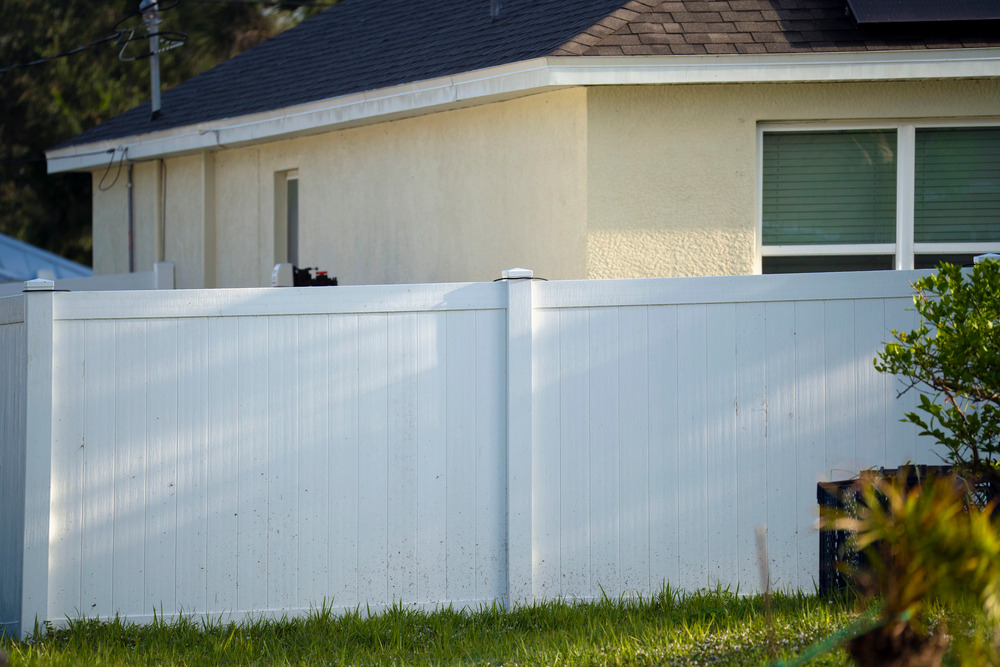
Vinyl is a popular choice for boundary fencing due to its low maintenance and strong privacy. High-quality vinyl, especially advanced formulations like CPVC resists warping, fading, and weather damage common in full-sun exposures. Typically installed at 6 feet tall with solid panels, vinyl privacy fences create a complete visual barrier and require little upkeep beyond occasional rinsing.
Wood offers a natural, traditional look and is relatively easy to install. However, it requires regular maintenance such as staining or painting and is vulnerable to rot, warping, and insect damage. For shared boundary fences, ongoing maintenance can sometimes become a source of disagreement between neighbors.
Chain link is valued for affordability and durability, providing clear boundary definition without privacy. It’s well-suited for side or rear property lines, especially where visibility or local regulations require open fencing. Maintenance needs are minimal, but privacy is limited.
Composite fencing delivers a wood-like appearance with improved weather resistance, while aluminum offers long-term durability with an ornamental look. Both can work well for boundary applications depending on budget, design preferences, and local requirements.
Installing a boundary fence is a legal decision, not just a construction project, and mistakes can be expensive.
Before building, confirm your exact property line with a professional survey. Deeds show boundaries on paper, but surveys mark them on the ground. The cost ($400–$1,000) is minimal compared to relocating a misplaced fence.
Many cities require fences to sit a certain distance inside the property line and limit fence height, often 6 feet for side and rear yards and 3–4 feet in front yards. Check local zoning and HOA rules before installation.
Fences built directly on the property line are often considered shared, with maintenance and costs split between neighbors. Written agreements help avoid disputes. If needed, you can usually build just inside your own property line.
Avoiding these common mistakes can save you time, money, and unnecessary disputes:
Relying on old fences, landscaping, or visual estimates often leads to costly placement errors. Always confirm boundaries with a current professional survey before installing a boundary fence.
Even when you’re legally allowed to build, surprising a neighbor with fence construction can create conflict. A brief conversation, especially one that includes sharing survey results, helps build trust and prevents disputes.
Installing posts exactly on the boundary can limit future maintenance access, forcing you or your neighbor to trespass just to perform repairs. Setting the fence a few inches inside your property line avoids this issue.
Materials that aren’t suited to your local climate can deteriorate quickly, leading to frequent repairs or liability concerns. For boundaries exposed to intense sun, wind, or heat, choose high-performance materials designed to resist warping and surface breakdown, such as advanced CPVC formulations rated to handle temperatures up to 200°F.
A boundary fence does more than mark a line; it protects your privacy, property rights, and long-term property value. Getting it right means thinking beyond installation and considering surveys, local regulations, neighbor communication, and material durability.
Start with a professional survey, confirm zoning and HOA requirements, and talk with your neighbor before building. Most importantly, choose materials designed for long-term performance. A boundary fence that warps, fades, or fails creates ongoing issues that affect both properties.
Contact us today to get expert guidance. We specialize in high-performance vinyl fencing built for demanding property line installations engineered to withstand extreme conditions while maintaining a clean, professional appearance for years to come.
Chain-link fencing is usually the cheapest option, averaging $8–$15 per linear foot installed, but it offers no privacy and a utilitarian look. While vinyl costs more upfront, its low maintenance and long lifespan often make it the better long-term value.
If a fence sits directly on the property line, it’s typically considered shared property and cannot be changed without mutual agreement. If the fence is built entirely on one neighbor’s property, that owner generally has the right to modify or remove it, subject to local laws.
A solid vinyl privacy fence is the most effective option for blocking neighbors, providing complete visual screening with minimal maintenance. Wood fences can work initially but often warp or develop gaps over time, reducing privacy.
California law generally treats boundary fences as a shared responsibility between neighbors under Civil Code Section 841. Height limits and specific rules vary by city and county, so local ordinances should always be checked before installation.