20 Years of Proven Performance
20 Years of Proven Performance
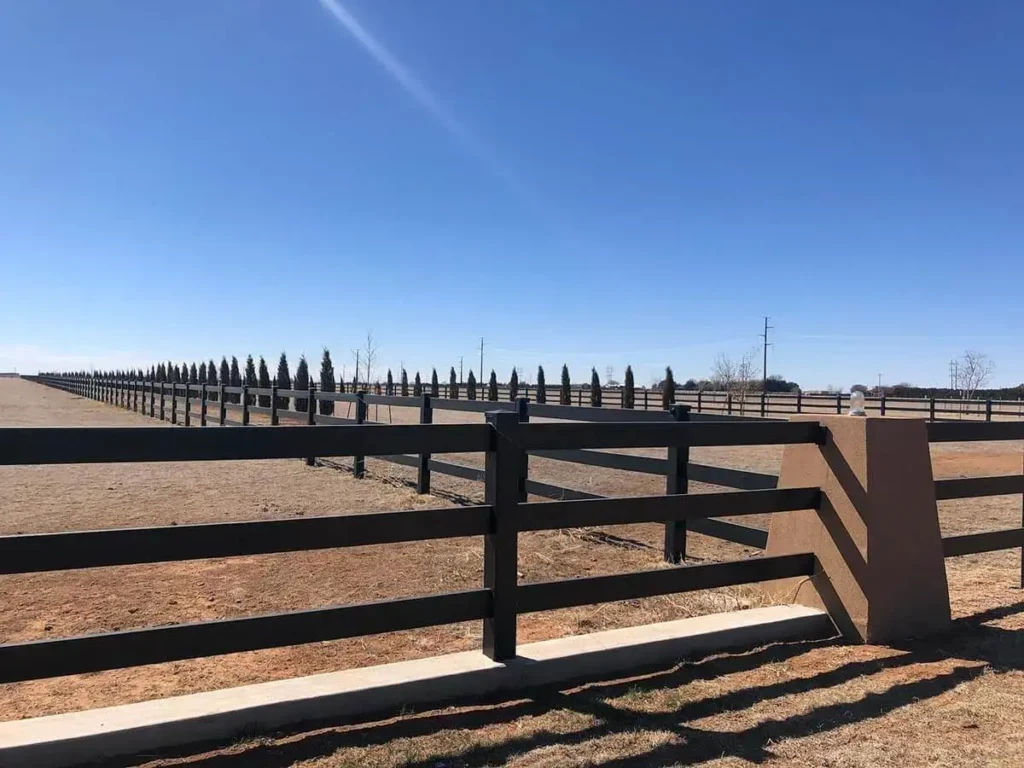
A fence can look solid from the driveway and still have openings that are wrong for the animals behind it. A customer choosing no-climb horse fencing needs to look beyond height and color. The mesh pattern, complete layout and installation all deserve a closer look.
No-climb fencing usually refers to closely spaced woven-wire horse fencing. It is a different construction from open post-and-rail fencing, including vinyl ranch rail. Understanding that distinction helps dealers, contractors and property owners compare the right products before ordering.
A common no-climb horse-fence pattern has rectangular openings measuring 2 inches by 4 inches. Wire manufacturer Red Brand describes its non-climb product as a woven grid secured at the intersections with knots. The close spacing is intended to discourage horses from stepping through or using the horizontal wires as footholds.
The name describes a design feature, not a promise that an animal can never become caught or get out. The mesh pattern alone does not tell you the finished fence height, gate design, ground clearance or support system. Check those details in the complete proposal.
Horse mesh should not be confused with general livestock wire simply because both arrive in rolls. University of Georgia Extension distinguishes horse mesh from conventional farm fencing with larger openings. It also cautions against substituting inexpensive welded-wire fabric for woven horse fencing because the welded joints may not hold up in field use.
When comparing materials, ask the supplier to identify the opening dimensions, woven construction, wire specification, coating and intended application in writing. Two products can look similar in a small photograph while differing in the details the installer needs.
Keep a sample or clearly labeled product sheet with the proposal. It gives the owner a reference and helps avoid substitutions when materials are ordered.
Woven mesh creates a closely spaced wire barrier. Vinyl ranch rail creates an open boundary with horizontal rails. More rails change the layout, but they do not turn an open rail fence into 2-by-4-inch mesh.
| Compare | Woven no-climb horse mesh | Open vinyl ranch rail |
| Construction | Closely spaced woven wire; a common pattern is 2 × 4 inches. | Horizontal rails with open spaces between them. |
| Product check | Opening size, wire, knots, coating and intended use. | Rail layout, openings, installation instructions and intended use. |
| Finished design | Requires suitable posts, supports, gates and installation. | Requires a suitable rail system, gates and installation. |
| Combination | A visible top rail may be part of a designed system. | Any mesh attachment needs manufacturer and installer confirmation. |
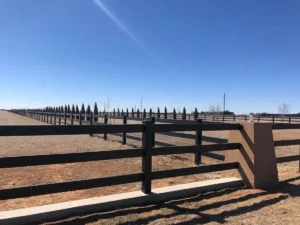
BLACKline’s ranch rail range includes two-, three- and four-rail styles, along with crossbuck and diamond layouts. These offer the open appearance many owners want along a property entrance or ranch boundary. They should be evaluated as rail systems, with their actual openings and intended use clearly described.
Where small-opening mesh is required, an open rail style addresses a different part of the design. Specify the mesh separately and have the proposed enclosure assessed for its intended use.
Our guide to vinyl, wood and electric horse fences covers the broader materials comparison.
Some projects combine mesh with a visible top rail. University of Georgia Extension discusses this approach as a way to improve the visibility of a wire fence. That general arrangement does not establish that mesh can be attached to any existing vinyl system.
For a proposed combination, have the installer and relevant manufacturers confirm the attachment method, supports and compatibility before materials are ordered. Do not improvise wire fastenings onto BLACKline posts or rails or assume that an alteration is covered by the product warranty.
Show the complete proposed assembly on the quote: which product supplies the mesh, which supplies the rails, how gates connect and who is responsible for the installation details. A mixed system needs a clear specification of its own.
University of Minnesota Extension emphasizes visibility, avoiding sharp projections, proper installation and maintenance. Its planning guidance also calls for gates that accommodate equipment and locations that avoid low areas where water can collect. These considerations apply beyond the mesh pattern.
Begin the project conversation with the horses and how the space will be used. A boundary around a large turnout area and a smaller working paddock may present different requirements. Tell the installer about ponies, young horses, animals that test fences, and any other species sharing the enclosure.
For a Bellingham or Whatcom County property, mark slopes, gate approaches, existing posts and access routes on the site plan. Ask the installer to address changes in ground level rather than assuming one bottom clearance will work along the whole run. Leave height and containment decisions to a site-specific assessment.
Record the proposed use, fence length, gate locations and the exact products being compared. Separate the material specification from installation work, removal of old fencing and any site preparation. If a mesh-and-rail option is being priced, label it separately from a rail-only option.
Keep product instructions and replacement-part details with the handoff. Confirm who will inspect the finished work and explain routine maintenance.
No. Opening size is only one part of the specification. Confirm the construction and intended use with the supplier; do not treat garden mesh or welded fabric as interchangeable with woven horse fencing.
Open ranch rail is a different configuration from closely spaced woven mesh. Compare the actual openings and the intended application instead of using the terms interchangeably.
No. It describes the mesh design. Gates, fence height, installation, condition and the animals using the enclosure still need attention.
If BLACKline ranch rail is part of your plan, request a quote with the proposed layout and intended use. Tell the team whether you are comparing an open rail boundary with a separate woven-mesh option so the products and installation requirements stay clear.
Got a question? Give us a call