20 Years of Proven Performance

20 Years of Proven Performance
You want privacy in your yard, but you also need your fence to look good, handle your climate, and work with your property’s unique challenges. Maybe you’re dealing with a sloped yard that makes standard fencing difficult. Or you face constant rain, temperature swings, or intense sun exposure. Perhaps you’ve watched neighbors’ fences warp, fade, or fail within just a few years.
You need more than Pinterest-worthy pictures. You need privacy fence ideas that combine aesthetics with real-world durability. That’s exactly what this guide delivers: 25 practical privacy fence ideas organized by BlacklineHHP experts.
Before diving into specific ideas, you need to understand what separates inspirational photos from fences that actually perform. A beautiful design means nothing if it warps in your climate or fails on your terrain.
Evaluate every privacy fence idea through these lenses: climate compatibility with your rain, temperature, and sun exposure patterns; terrain adaptability for slopes and uneven ground; material durability for 10+ year performance; realistic maintenance requirements; local code compliance; and budget with installation complexity.
The best privacy fence idea checks all these boxes while delivering the aesthetic you want. Now let’s explore 25 options that do exactly that.
1. Horizontal Board Privacy Fence— Clean, contemporary lines using weather-resistant vinyl boards installed horizontally. This modern look works exceptionally well in rainy climates because water runs off easily without pooling in joints.
2. Mixed Horizontal & Vertical Panels— Combine horizontal sections with vertical accent panels for dimensional variety. This breaks up long fence runs and adds visual interest while maintaining full privacy.
3. Horizontal with Metal Posts— Pair horizontal vinyl boards with dark metal or aluminum posts for an industrial-modern aesthetic. The contrast creates a sophisticated look that works in urban and suburban settings.
4. Wide Plank Horizontal— Use wider horizontal boards (8-12 inches) for a bold, streamlined appearance. Fewer seams mean a cleaner look and fewer potential points for weather intrusion.
5. Horizontal with Lighting Integration— Install horizontal boards with built-in channels for LED lighting strips. This creates evening ambiance while maintaining daytime privacy.
Horizontal designs offer a modern look, but material choice is crucial. These boards bear more weight stress than vertical ones, especially in sun-exposed, dark-colored setups.
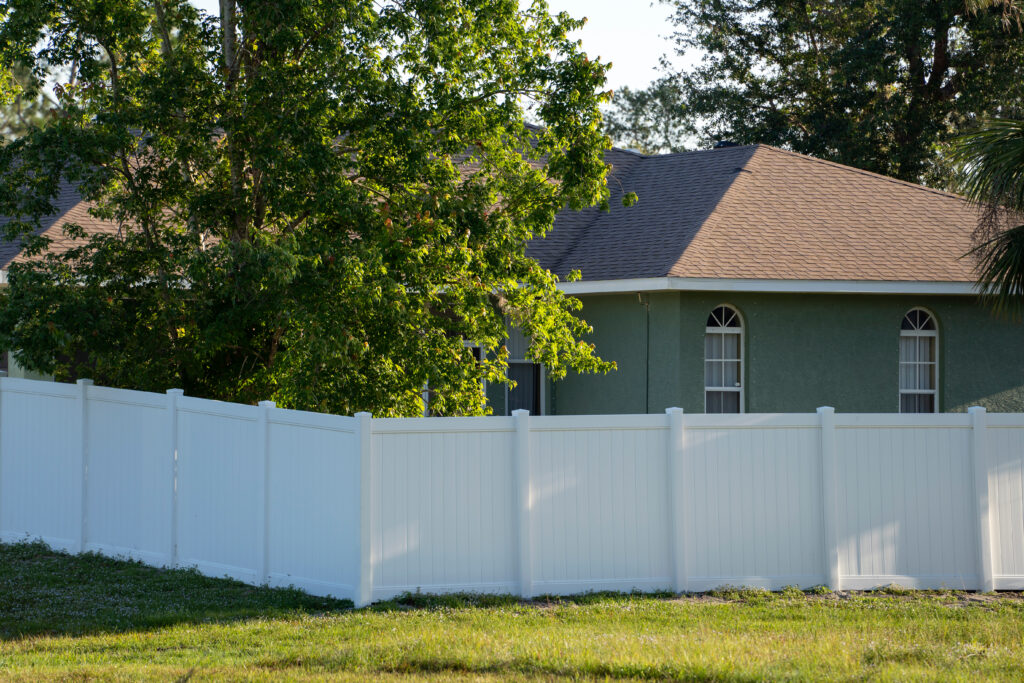
6. Tongue-and-Groove Privacy Panels— The classic privacy fence with interlocking boards that create seamless coverage. This proven design handles all climates and provides maximum privacy with no sight lines.
7. Board-on-Board Vertical— Overlapping vertical boards create depth and shadow lines while ensuring no gaps develop as materials age. This design offers a more dimensional appearance than flat panels.
8. Solid Panel with Decorative Top— Combine solid privacy panels with ornamental picket-style tops. You get full privacy at eye level with decorative appeal above six feet.
9. Vertical with Lattice Accent— Install solid privacy panels with lattice sections at the top 12-18 inches. This allows airflow and light while maintaining privacy where it matters most.
10. Shadowbox Style— Boards installed on both sides of rails with overlapping gaps create a fence that looks finished from both sides. This works well for properties where both sides of the fence are visible.
Traditional vertical designs remain popular because they work. The vertical orientation naturally sheds water, installs more easily on slopes, and provides time-tested structural performance. Vertical boards also handle wind load effectively, with each board flexing independently rather than presenting a solid surface to wind gusts.
11. Stepped Panels for Slopes— Install level panels that step down a hillside, maintaining a level topline. Each panel drops to accommodate grade changes, creating a clean, architectural look.
12. Racked Panels Following Grade— Angle panels to follow the slope of your yard. This maintains consistent ground clearance on hills and creates a more natural flow with your landscape.
13. Terraced with Retaining Elements— Combine privacy fencing with terracing or retaining wall elements for steep slopes. This creates level areas while providing privacy and managing erosion.
14. Custom Height Transitions— Design panels with varying heights that transition smoothly across elevation changes. This works particularly well when moving from flat areas to sloped sections.
15. Corner and Angle Solutions— Use custom corner posts and angled panels for properties with non-90-degree angles or irregular property lines. Proper planning prevents gaps and structural weakness at angles.
Challenging terrain calls for specific solutions. Stepped panels are more affordable than custom-racked ones and they add an architectural look. Racked panels follow slopes smoothly but need precise installation and sturdy, sag-resistant materials.
On slopes, posts should be set 6–12 inches deeper to prevent frost heave and ensure stability. Consider grading options before installation. Sometimes, minor yard leveling eliminates complex fencing requirements.
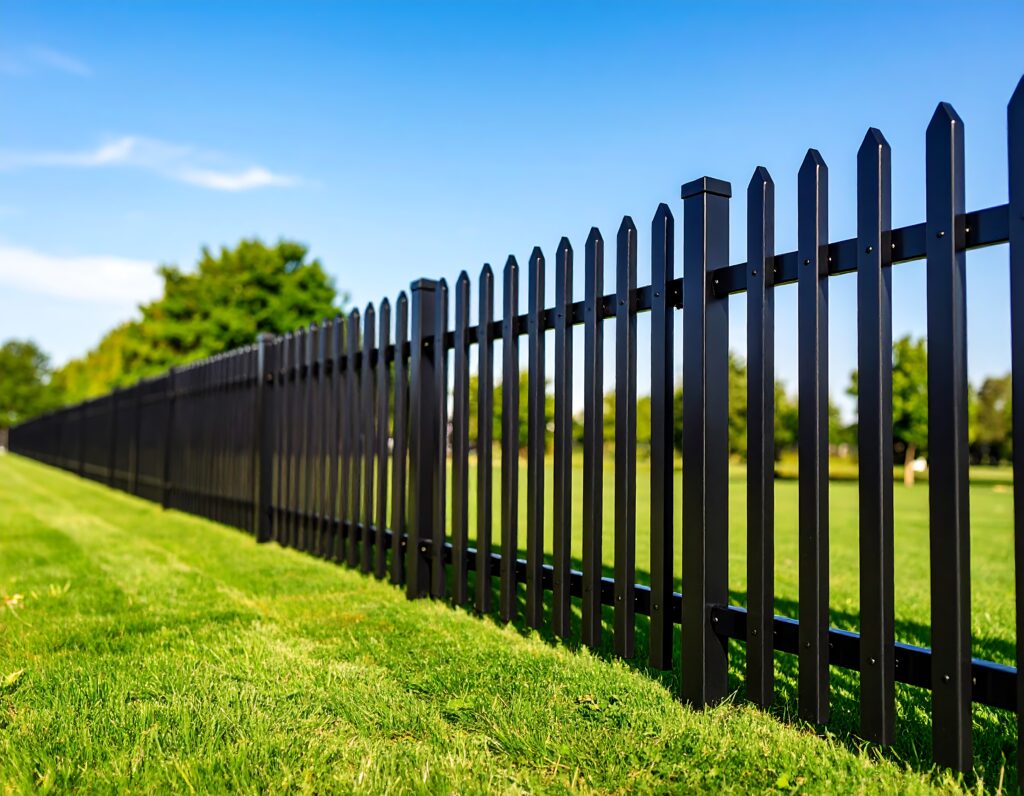
16. Full Privacy with Wind Gaps— For coastal or high-wind areas, install solid panels with small gaps between boards. This provides privacy while allowing wind to pass through, reducing stress on posts and preventing panel failure.
17. Louvered Privacy Panels— Angled slats block sight lines while allowing airflow. This design works well in hot climates where air circulation matters and in windy areas where solid panels create too much wind load.
18. Reinforced Post Systems— Use larger posts with deeper installation and closer spacing for heavy weather zones. This prevents fence failure during storms and extreme conditions.
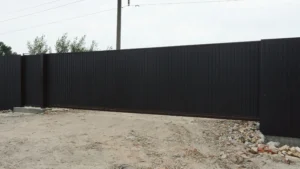
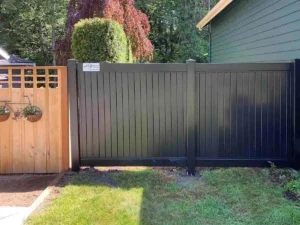
19. Dark Colors with Heat-Resistant Materials— Black or dark brown fencing requires CPVC formulation with heat distortion temperatures exceeding 200°F. Standard PVC warps when dark surfaces heat up in direct sun—even in moderate climates.
20. Decorative Caps and Water Channeling— Add post caps and design features that direct water away from fence connections. This matters most in rainy climates like the Pacific Northwest, where moisture management extends fence life.
21. Extended Post Heights— Install posts taller than fence panels in areas with heavy snow load or extreme winds. The extra post height provides structural reinforcement where weather stresses are highest.
22. Ground-Level Gap Management— Design appropriate ground clearance (typically 2-4 inches) to allow drainage and accommodate seasonal ground shifts from freeze-thaw cycles. Too little clearance traps moisture and leads to bottom panel degradation even with quality materials.
Your climate dictates which features matter most. Pacific Northwest properties need excellent drainage and moisture management. Hot, sunny regions require heat-resistant materials for dark colors. High-wind coastal areas need wind load management through panel design or reinforced posts. Design for your specific conditions, not generic nationwide recommendations.
23. Privacy Fence with Built-in Planters— Integrate planter boxes into the fence design to soften the appearance and add greenery. This works particularly well on patios and deck perimeters where you want both privacy and growing space.
24. Integrated Gate Systems— Design gates that match panel style seamlessly. Whether horizontal, vertical, or decorative, gates should look like a natural part of your fence design, not an afterthought.
25. Privacy with Pet/Child Safety Features— Design bottom sections with no horizontal rails that create climbing opportunities. Add secure latches at heights children can’t reach. Ensure no gaps allow small pets to escape.
These functional additions transform privacy fences from simple barriers into integrated landscape features. Built-in elements often cost less when installed during original construction than when added later. Consider your actual use patterns—pets, children, entertaining, gardening—and incorporate relevant features from the start.
Material Selection Matters More Than Design
Here’s what many homeowners overlook: your material choice determines whether your fence still looks good in five years. Horizontal designs are especially demanding. They need materials that won’t sag over time. Heat resistance is key. Cheap vinyl often sags between posts as it ages, especially in sunlight.
Dark colors make this worse. Black or dark brown fences absorb more heat, and only CPVC can handle that. Standard PVC or polyethylene can warp or fail, no matter the climate.
Your climate determines what material you need, and material quality determines how long your fence lasts. Choose the right material first, then pick a design that works with it.
Slope Strategy Saves Money
Stepped panels are much more affordable than custom-racked ones because they use standard sizes. Before investing in expensive custom work, consider minor yard grading. Strategic leveling can often eliminate the need for complex slope solutions.
If grading isn’t an option, proper post depth is critical on sloped ground. Posts should be set 6–12 inches deeper than on flat terrain to prevent frost heave and maintain stability.
On slopes, the installation method matters more than the panel style. A well-installed fence will outperform a stylish one if the terrain isn’t handled correctly.
Design for Your Specific Climate
In the Pacific Northwest, drainage is important. Avoid fence designs that trap moisture or allow water to collect in joints. In hot, sunny climates, dark-colored fences must use heat-resistant materials. This isn’t optional. High-wind areas require stronger construction, with posts often spaced at 6 feet instead of the standard 8.
Washington State Specific Notes
Check setback rules before buying materials. These vary by city and county, and violations can lead to costly fence removal and reinstallation. If you’re in an HOA, get approval before installation, as many restrict fence height, color, and style.
Most areas require permits for fences over 6 feet. Be sure to include permit time and fees in your project plan.
The best privacy fence combines your style with materials suited to your climate and terrain. Even the most beautiful designs fail if the materials can’t handle your weather. For example, cheap vinyl sags in horizontal fences, dark colors fade and warp under the summer sun, and fences on slopes lean without properly deep posts.
Start by choosing materials proven to perform in your conditions. Then pick design features that fit your property’s challenges: stepped panels for slopes, reinforced posts for wind, and proper drainage for rain. This approach ensures your fence looks great on day one and stays strong and attractive for decades.
Ready to explore privacy fence options for your specific property and climate? Contact us today for expert guidance on designs that work in the Pacific Northwest and beyond. We’ll help you choose ideas that deliver lasting privacy and performance. Get your free quote now!