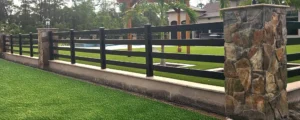
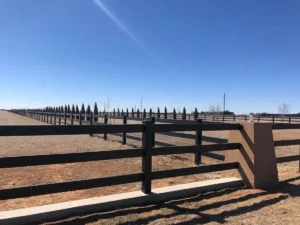
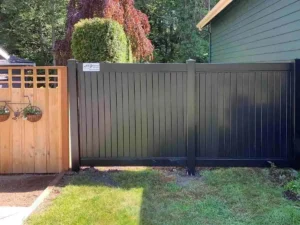
20 Years of Proven Performance
20 Years of Proven Performance
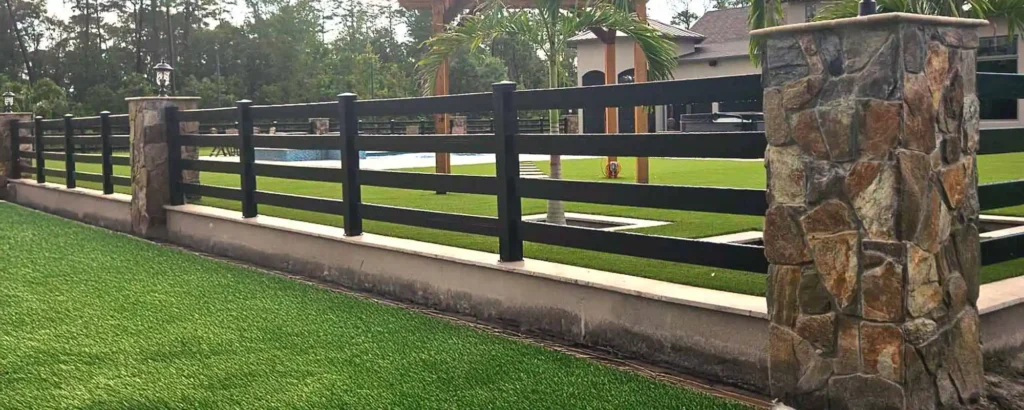
A two-rail fence can define a property edge without closing off the view. A three- or four-rail layout adds more horizontal coverage, but it also changes the height, material list and appearance of the project. For dealers and contractors, the useful comparison starts with what the fence needs to do.
BLACKline HHP lists its two-rail ranch fence at 36 inches, its three-rail fence at 54 inches and its four-rail fence at 60 inches. Use those dimensions to narrow the options, then review the site and intended use before ordering.
These are the heights listed for BLACKline HHP’s standard products. The current shop drawing and project layout should govern the final order.
| Style | Listed height | Discuss before ordering |
| 2-rail | 36 inches (3 feet) | Low, open property boundaries. Review any containment requirement separately. |
| 3-rail | 54 inches (4½ feet) | Taller boundary with three rails. Check rail openings and ground clearance. |
| 4-rail | 60 inches (5 feet) | Tallest of these standard layouts. Check the full enclosure and gate design. |
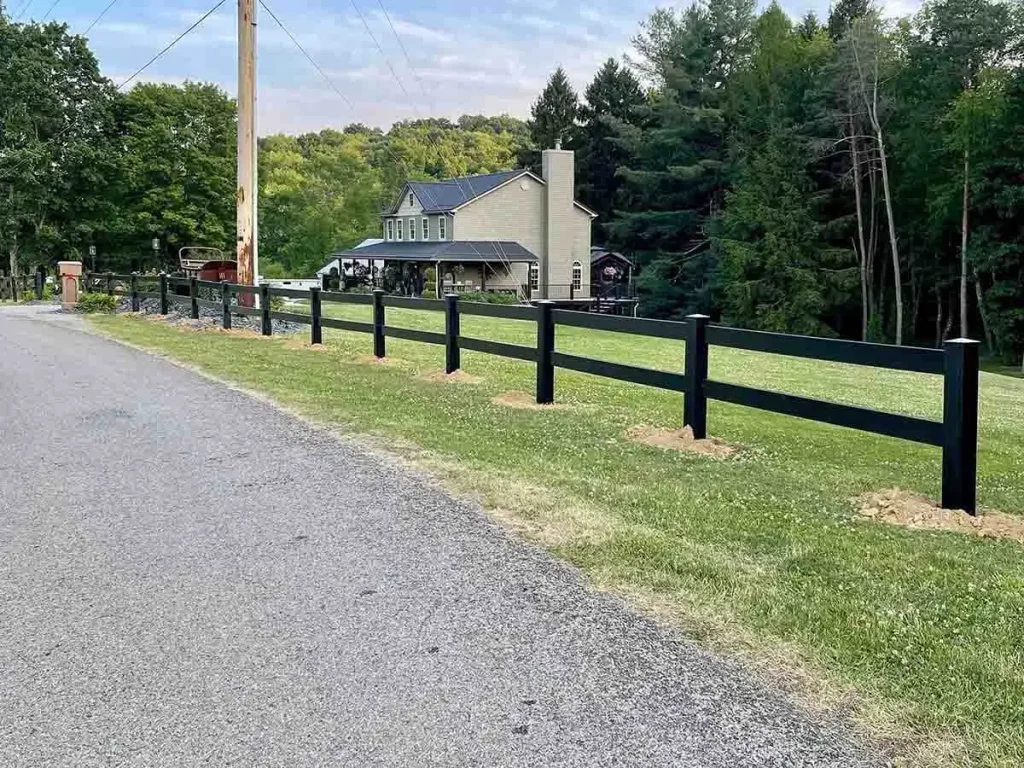
A two-rail layout gives a long frontage a clear visual boundary while leaving the landscape open. At BLACKline HHP’s listed 36-inch height, it is worth considering for decorative property edges, driveways and areas where the fence’s main job is to mark a change between spaces.
Show the customer a real installation photo before quoting. Two rails create a noticeably lighter pattern than three or four, especially when the fence runs across the front of a house or an open field.
Be clear about what remains open. A two-rail fence leaves substantial space between and below the rails. It should not be selected as a standalone horse enclosure simply because a brochure calls the style “ranch” or “horse” fencing. If animal containment is part of the project, review the complete design with the supplier and an experienced equine fencing installer.
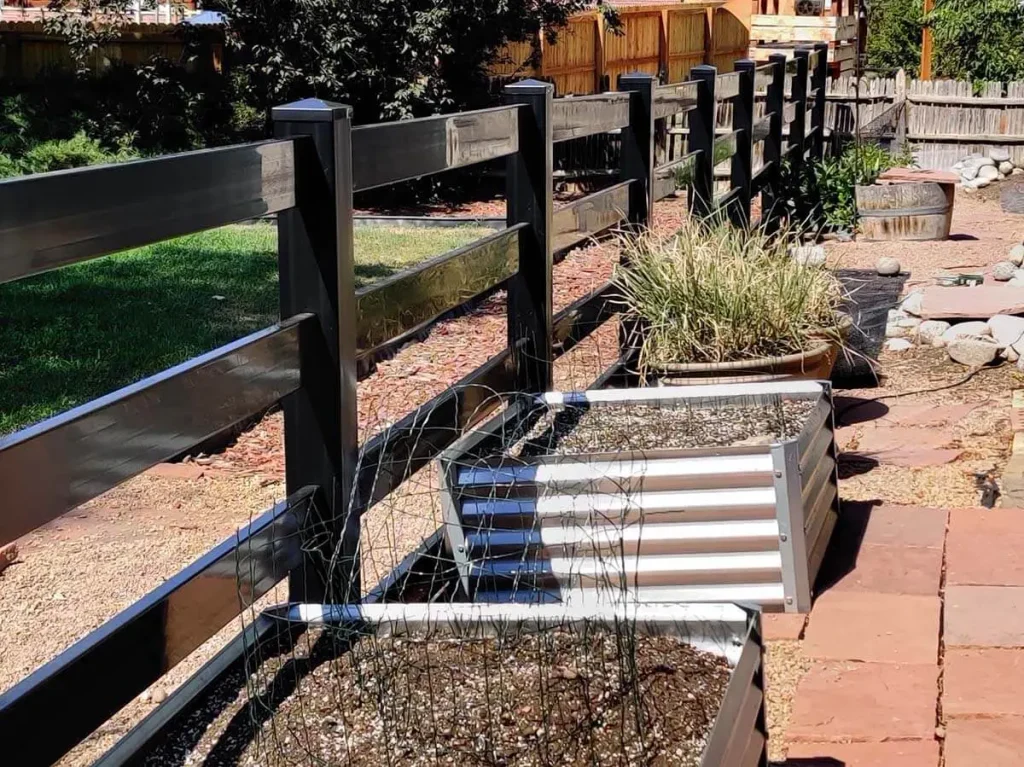
BLACKline HHP’s three-rail vinyl fence is listed at 54 inches. Compared with its two-rail style, the change includes both an extra rail and a taller fence. That makes the three-rail option useful to discuss when the customer wants a more substantial boundary but still wants views through the fence.
For a dealer, this is a good point to move from style photographs to the shop drawing. Confirm the finished height, the openings between rails and the clearance above the ground. Those details matter more than the rail count alone when the project involves horses or uneven terrain.
A three-rail layout also needs its own material takeoff. Do not price it as a two-rail run with one extra board. Post lengths, gates and the installation layout must match the selected system. Review the BLACKline HHP three-rail product page with the customer so the quote describes the actual configuration.
BLACKline HHP’s four-rail style is listed at 60 inches, or 5 feet. It provides the tallest standard option in this comparison and a fuller horizontal pattern. That can suit a project where the customer prefers a stronger visual boundary while keeping an open ranch-rail appearance.
The additional rail does not automatically make a fence suitable for every animal or site. Its usefulness depends on the actual openings, the ground clearance and the way the whole system is installed. Ask the customer whether the fence is marking frontage, enclosing a turnout or separating areas with different uses.
For purchasing, compare a four-rail quote with the same linear footage, gate openings and installation scope as the alternatives. A lower total from another quote may reflect fewer gates, different site preparation or a different finished height.
Penn State Extension’s fence-planning guidance identifies 54 to 60 inches as a general height range for horse fences, with taller fencing sometimes needed for larger horses, stallions or jumpers. It also emphasizes openings that avoid trapping a hoof or head. Those are design considerations, not proof that a particular product or rail count is suitable for every horse.
Review the animals’ size and behavior, the fence’s purpose, rail spacing, bottom clearance and gate details with the installer. Changing rail count alone cannot resolve every containment issue. Where a supplemental barrier is proposed, confirm its suitability and attachment details rather than adding an unapproved modification.
Our broader guide to vinyl, wood and electric horse fences compares materials. Use the rail-count comparison here to discuss the dimensions and layout of the BLACKline HHP options.
Bring the supplier a marked layout, not just a total number of feet. Identify the selected rail style, each fence run, corners, ends, gates and changes in ground level. Include the intended use and any animal-containment requirements.
Ask how the system will follow a slope and how the installed height and bottom clearance will be maintained. A fence that looks evenly spaced on flat ground may need a different layout where the grade changes. Leave post spacing and installation details to the manufacturer’s drawings and instructions.
For a Bellingham or Whatcom County project, include site photos that show the terrain and access for the installation crew. This gives the dealer a more useful starting point than a style reference alone.
For BLACKline HHP’s listed standard products, yes: 54 inches for three rails compared with 36 inches for two. Confirm the current drawing before ordering because rail count is not a universal height standard across manufacturers.
No. The 60-inch listed height is one consideration. Horse size, behavior, openings, gates and installation all affect the decision. Review the whole enclosure with an experienced installer.
Do not assume the existing posts and components will accept another rail. Ask BLACKline HHP or your dealer to review the proposed change against the correct product drawings before buying parts or modifying the fence.
Compare BLACKline HHP’s two-, three- and four-rail ranch fence options, then request a quote with your preferred style, approximate footage, gate openings and project location. Our Bellingham-based team can help you work through the product details before you place an order.