You’re researching railing options and want a material that stands the test of time without constant maintenance. Wood can rot, crack, and splinter, demanding regular sealing or staining. Metal is strong but prone to rust and corrosion, especially in humid or coastal areas.
Vinyl, on the other hand, offers a low-maintenance solution that resists rot, rust, and fading, keeping your railings looking great with minimal effort.
What Makes Vinyl Railing the Smart Choice
Vinyl railing systems are engineered polymer barriers for decks, porches, balconies, and commercial walkways. Quality vinyl resists weather, requires zero maintenance beyond occasional hosing, and maintains its appearance for decades.
The comparison is straightforward: Wood needs annual staining and rots. Metal rusts and needs repainting. Vinyl needs a garden hose rinse.
This guide covers material differences, design options, installation factors, and performance expectations so you understand what separates superior vinyl railing from cheap alternatives that fail.
Why Your Railing Choice Matters
Railings provide safety and curb appeal. They also face brutal exposure; direct sunlight, temperature swings, UV radiation, rain, and snow attack them constantly.
Choose wrong and you’ll deal with fading, warping, and expensive replacement within years. Choose right and you get one installation that lasts decades with minimal intervention.
Understanding Vinyl Fencing Material & Performance
Not all vinyl is equal. The difference is chemistry.
CPVC vs. PVC: Standard PVC has a heat distortion temperature below 160°F. Dark surfaces in direct sun commonly reach 180°F or higher. CPVC maintains structural integrity above 200°F.
UV protection: Quality railings use multiple UV inhibitors and proprietary carbon black pigmentation, often 40% above recommended levels. This prevents chalking and fading.
Bottom line: CPVC-based railings with proper UV protection won’t sag, distort, or fade after years in harsh sun. Standard PVC railings will warp and fail.
From Decks to Commercial Spaces: Vinyl Railing Applications and Styles
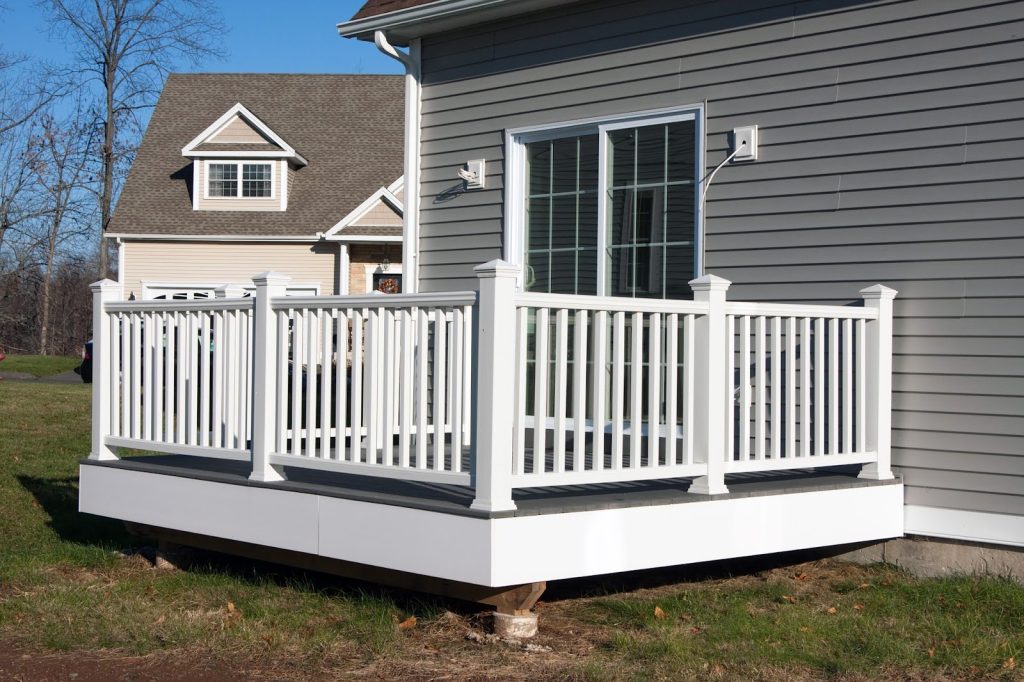
Residential: Deck railings, porches, balconies, and pool enclosures. Child-safe and pet-friendly, no splinters.
Commercial: Apartments, condominiums, assisted living facilities, and ADA-compliant walkways. Low maintenance makes them economical for property managers.
Styles: Modern lines to traditional pickets to ornamental designs. Quality black vinyl now offers lasting elegance when properly formulated, making it one of the top modern fence ideas for contemporary properties.
Key Installation Considerations for Safe, Durable Vinyl Railings
Professional vs. DIY: Improper post spacing, inadequate fastening, or incorrect mounting compromises safety and voids warranties. Professional installation ensures code compliance.
Critical factors:
- Post spacing typically 4-6 feet maximum
- Fasten into rim joists, not just decking
- Include expansion gaps for thermal movement
Local codes: Height requirements (usually 36″ for decks, 42″ for elevated areas), baluster spacing (typically 4″ maximum), and load ratings vary by location. Verify before purchasing.
Timeline: Professional installation takes 1 to 2 days for standard deck railings.
How to Keep Your Vinyl Railings Looking Great for Decades
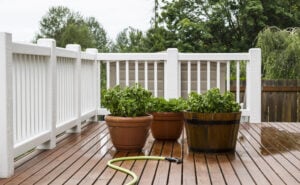
Maintenance: Annual rinse with garden hose and mild soap. No staining, painting, scraping, or sealing.
Avoid: High-pressure washing and harsh chemicals. Use a soft brush and warm soapy water for stubborn marks.
Weather performance: Properly formulated vinyl withstands extreme heat, resists UV degradation, handles freeze-thaw cycles, and doesn’t absorb moisture.
Warranty: Quality manufacturers offer limited lifetime warranties covering abnormal weathering, discoloration, and structural distortion.
Avoid These Costly Vinyl Railing Errors
Buying cheap vinyl: Standard PVC in hot climates fails. Saving a few hundred dollars upfront costs thousands in replacement.
Poor installation: Improper fastening and ignored expansion gaps cause structural problems and void warranties.
Ignoring codes: Violations create safety hazards and legal liability.
Assuming all vinyl is equal, CPVC vs. PVC formulation determines whether your railings look great in year ten or fail by year three.
Why Material Quality Makes All the Difference
Material quality determines everything. CPVC formulation with proper UV protection delivers decades of maintenance-free service. Cheap alternatives fail when weather exposes their limitations.
Questions about vinyl railing for your property? Contact us today for expert guidance on selecting systems that stand the test of time.